

The redesign of mechanical systems aims to optimize the heating, ventilation and air conditioning (HVAC) systems of buildings equipped with an automated control device to adapt them to the actual needs of the occupants and thus prevent energy waste.
Root out waste,
accumulate savings
Recommissioning mechanical systems is an approach designed to optimize heating, ventilation and air conditioning (HVAC) systems in buildings with automated controls. For example, it may involve changing setpoints or heating, cooling or lighting schedules to suit the actual needs of the occupants and thus prevent wasted energy.
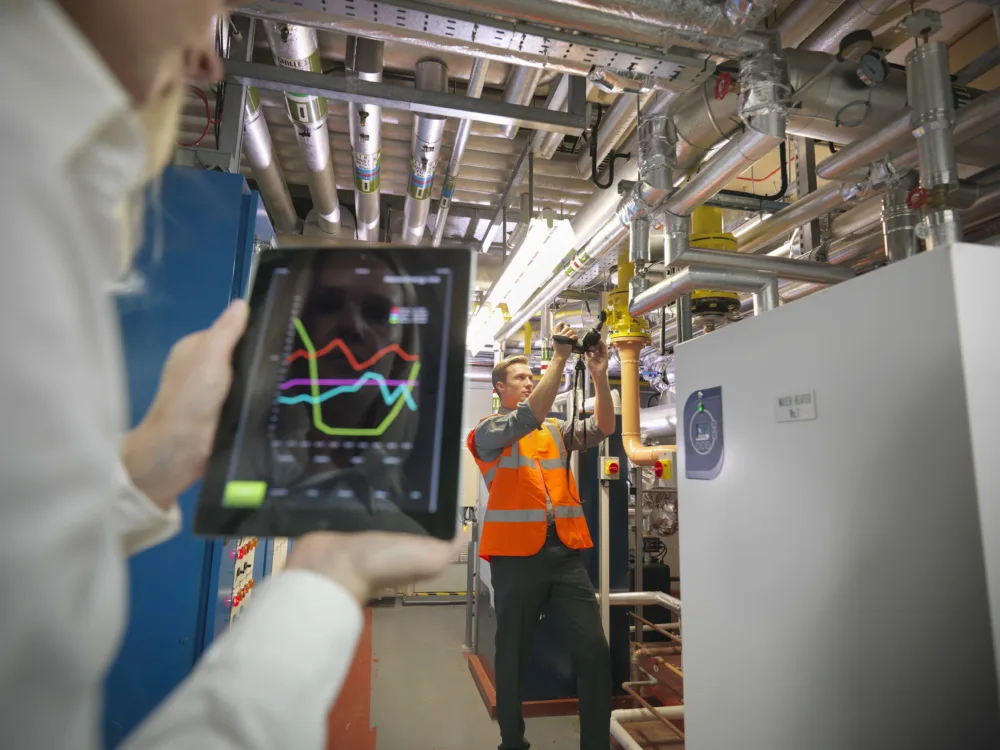
A certified recommissioning (Rcx) agent, an engineer with specialized training, must be hired to do the recommissioning. The agent will perform the verifications, propose adjustments to the HVAC systems and implement the necessary corrective actions. They will also prepare and file the grant application for the customer, if eligible. If equipment is broken, the agent can recommend the appropriate specialist. Once the measures have been implemented, the customer monitors the outcome.
Steps in a recommissioning process
- 1
Planning phase:
The preparation of a project to recommission a building’s mechanical systems. It includes setting project objectives, selecting the agent certified in recommissioning mechanical systems for buildings, preparing the energy report, putting the project team together and developing the plan for recommissioning the building’s mechanical systems.
- 2
Investigation phase:
The agent performs several tasks. First, they review the available documentation on the building and assess the various mechanical systems. They then select and prioritize the measures that present energy efficiency opportunities in the building. Finally, they develop a definitive implementation plan for the actions identified and persistence strategies to support effective energy savings.
- 3
Implementation phase:
The agent implements the selected measures followed by the persistence strategies.
- 4
Transfer phase:
The agent guides the customer and maintains documentation on the building’s mechanical systems. This step may also involve training building management staff to ensure knowledge transfer for the day-to-day application of persistence strategies.
- 5
Continuous monitoring phase:
The goal is to ensure the continuity of measures implemented and promote effective savings over the medium term. With this in mind, the agent will apply a series of performance indicators to detect anomalies. This will allow them to analyze the cause of discrepancies observed in the building. In addition, the agent will support technical staff throughout the continuous monitoring phase and make the necessary corrections.
With the guidance of a certified and financially supported expert, organizations can reduce waste, optimize their mechanical facilities and achieve significant and measurable energy savings.
The benefits
Recommissioning is a low-cost solution that can offer many benefits if properly executed:
- Reduction in energy consumption (5% to 15%)1
- Reduction in GHG emissions and operating costs1
- Longer equipment lifespan2
- Improved occupant comfort and indoor air quality2
- Return on investment typically within 3 years2
Commissioning or recommissioning?
If you’re working on a new building and you’re optimizing its systems to make them work from the get-go, then you’re talking about development (or commissioning). But if you’re working on a building that is already in operation to improve or restore the performance of its systems, that’s recommissioning (RCx)