

The air exhausted from your home is a significant source of energy that can be recovered to save money, reduce GHG emissions, and improve indoor air quality.
How does energy recovery work?
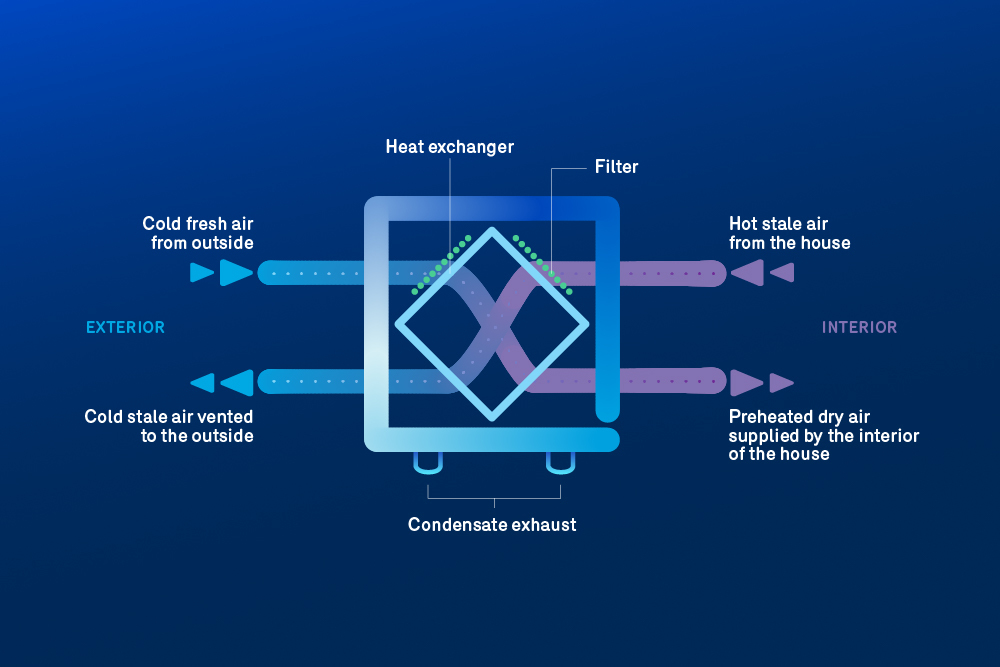
To do this, simply add a heat recovery ventilator (HRV) or energy recovery ventilator (ERV) to your home’s ventilation system, if your home does not already have one.1 An HRV transfers heat between the air entering and leaving your home. When you heat your home in winter, the HRV captures some of the heat from the stale air exhausted outdoors by your ventilation system and uses it to preheat the fresh air supplied to your home. In summer, if you have an air conditioner, the HRV partially removes heat from the incoming air and transfers it to the outgoing air. An ERV goes even further by transferring both heat and moisture, allowing you to maintain the desired indoor humidity level regardless of outdoor temperature.
Depending on the number of rooms in your home and device type, purchasing and installing an HRV will typically cost between $4,000 and $9,000, while an ERV will cost about $1,000 more. However, this investment can pay off over the long term through reduced energy costs. For a two-bedroom home, an HRV is estimated to save about $160 per year.2
Important : if you have an HRV or ERV installed, make sure the work is carried out by a qualified contractor, and clean your unit, or have it cleaned, at least once a year (ideally every three months) to ensure optimal performance.
The benefits of an HRV or ERV:
- Could reduces your heating costs (and cooling costs, where applicable)
- Improves indoor air quality by renewing the air and removing pollutants and allergens
- Helps control indoor humidity levels year-round (ERV)
Good to know
An Energy Star®-certified heat recovery ventilator recovers from 60% to more than 80% of the heat from exhaust air, depending on outdoor temperature.
In Quebec, heating and air conditioning alone account for 54% of a household’s energy expenses.3 An HRV or ERV might be an excellent way to reduce these ongoing costs.
How a heat exchanger in a winter HRV works